
Email deliverability isn't a given; it's a constant, engineered effort. For many, sending an email is a simple click, an instantaneous dispatch of a message across the digital ether. Yet, beneath that simplicity lies a complex, meticulously constructed system designed to ensure your message doesn't just leave your outbox, but genuinely arrives in the intended inbox. This isn't magic; it's the result of robust infrastructure, meticulous IP reputation management, and real-time monitoring. For founders, marketers, and developers, understanding this distinction is crucial, as it translates directly to messages reaching inboxes, not spam folders – and ultimately, to the success of your communication strategy.
### The Foundations of Deliverability
At its core, deliverability is about trust. Internet Service Providers (ISPs) like Gmail, Outlook, and Yahoo are the gatekeepers, and their primary goal is to protect their users from unwanted mail. To do this, they employ sophisticated algorithms that evaluate every incoming email based on a multitude of factors.
**IP Reputation: Your Sender's Digital Footprint**
Every email you send originates from an IP address. This IP address carries a reputation, much like a credit score. If an IP address has a history of sending spam, it will be flagged, and subsequent emails from it are more likely to be blocked or routed to the spam folder.
* **Dedicated vs. Shared IPs:** Dedicated IPs offer more control over your reputation, as it's solely based on your sending practices. Shared IPs, while often more cost-effective, mean your reputation can be affected by the sending habits of others sharing the same IP.
* **IP Warming:** For new IPs, a gradual increase in sending volume (IP warming) is critical to build a positive reputation with ISPs, demonstrating legitimate sending patterns.
**Domain Reputation: Your Brand's Digital Identity**
Beyond the IP, your sending domain also has a reputation. This is where email authentication protocols come into play:
* **SPF (Sender Policy Framework):** Verifies that the sending server is authorized to send emails on behalf of your domain.
* **DKIM (DomainKeys Identified Mail):** Adds a digital signature to your emails, allowing recipients to verify that the email hasn't been tampered with in transit.
* **DMARC (Domain-based Message Authentication, Reporting & Conformance):** Builds on SPF and DKIM, providing instructions to ISPs on how to handle emails that fail authentication, and offering reporting on email authentication results. Implementing DMARC is a strong signal of legitimacy to ISPs.
**Content Quality: What You Say and How You Say It**
Even with perfect authentication and IP reputation, poor content can trigger spam filters.
* **Spam Triggers:** Avoid excessive use of all caps, exclamation points, suspicious links, or common spammy phrases.
* **Personalization:** Relevant, personalized content is less likely to be marked as spam.
* **HTML Structure:** Clean, well-formatted HTML emails are preferred over poorly coded or overly image-heavy messages.
### The Invisible Infrastructure
Behind the scenes, a robust email infrastructure is constantly working to maintain high deliverability. This isn't just about sending emails; it's about intelligently routing them, reacting to feedback, and adapting to the ever-changing landscape of ISP rules.
**Server Architecture and Redundancy**
A reliable email platform uses distributed server architecture to ensure high availability and scalability. If one server experiences an issue, others can seamlessly take over, preventing interruptions in your sending. Redundancy is key to consistent performance.
**Real-time Monitoring and Feedback Loops**
Sophisticated platforms continuously monitor sending metrics:
* **Bounces:** Hard bounces (permanent failures) and soft bounces (temporary issues) must be processed and acted upon immediately to maintain a clean list and good reputation.
* **Complaints:** When a recipient marks your email as spam, ISPs send feedback loop (FBL) reports. Ignoring these reports will quickly damage your reputation. Promptly removing complainers is non-negotiable.
* **Engagement Metrics:** ISPs also look at how recipients interact with your emails – opens, clicks, unsubscribes. High engagement signals legitimacy; low engagement can indicate a problem.
**ISP Relationships**
Reputable email service providers actively build and maintain relationships with major ISPs. This includes participation in whitelisting programs, direct communication with abuse desks, and staying abreast of policy changes. This proactive engagement helps resolve issues quickly and ensures smoother delivery pathways.
### Mailofly's Approach to Engineered Deliverability
At Mailofly, we understand that your message's arrival is paramount. Our architecture is built from the ground up to prioritize deliverability, treating it not as an afterthought, but as an integral, engineered component of our service.
We invest heavily in maintaining high-quality IP pools, implementing cutting-edge authentication standards, and employing advanced monitoring systems that react in real-time to maintain optimal sending conditions. Our infrastructure is designed for resilience and performance, ensuring that the complexities of email routing are handled seamlessly, allowing you to focus on what you do best: crafting compelling messages.
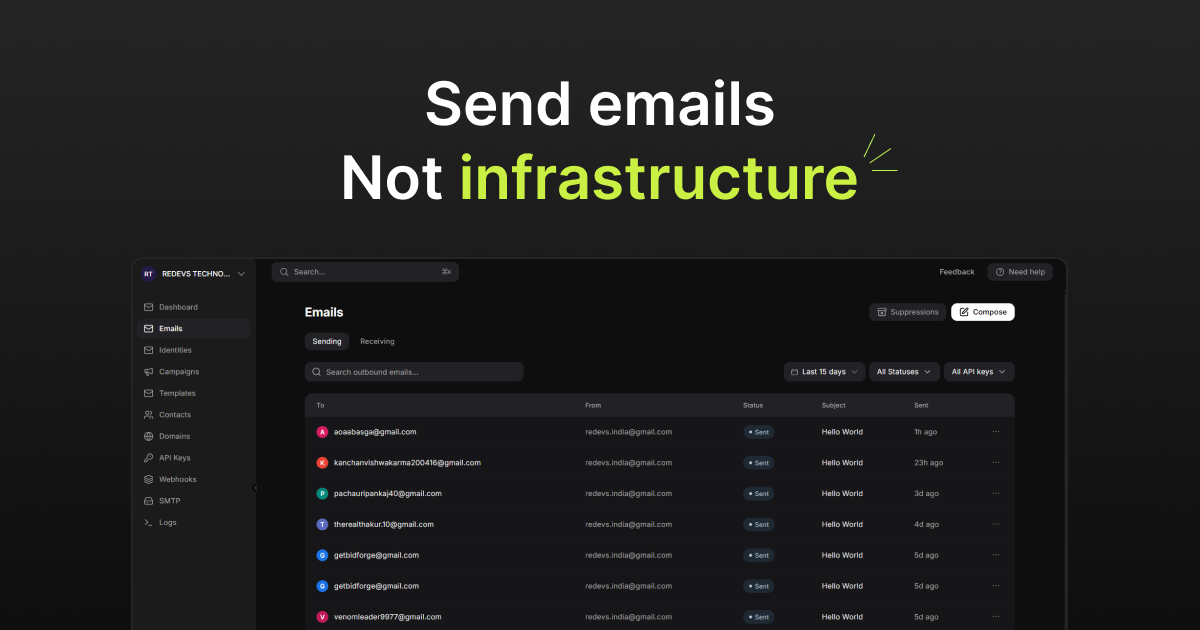
We believe in transparency. That's why Mailofly offers transparent live logs and detailed analytics, giving you visibility into the journey of every email you send. And should you ever have questions or encounter an issue, our dedicated support team, comprised of deliverability experts, is ready to assist. We don't just send emails; we ensure their arrival.
### Practical Steps for Better Deliverability
While Mailofly handles the heavy lifting of infrastructure and reputation management, there are crucial steps you, as a sender, must take to safeguard and enhance your deliverability.
1. **Maintain a Clean Email List:** Regularly remove inactive subscribers, hard bounces, and complainers. A smaller, engaged list is always better than a large, unengaged one.
2. **Prioritize Consent:** Only send emails to individuals who have explicitly opted in to receive them. Double opt-in is the gold standard for building a high-quality, engaged audience.
3. **Segment Your Audience:** Send targeted, relevant content to specific segments of your list. This increases engagement and reduces the likelihood of spam complaints.
4. **Monitor Your Metrics:** Keep a close eye on your open rates, click-through rates, bounce rates, and complaint rates. Deviations can signal underlying deliverability issues.
5. **Provide a Clear Unsubscribe Option:** Make it easy for recipients to opt out. Forcing them to stay subscribed often leads to spam complaints, which are far more damaging than an unsubscribe.
6. **Test Your Emails:** Use email preview tools and spam checker services to ensure your emails render correctly and don't trigger common spam filters before sending.
### Conclusion
Email deliverability is far from a simple technicality; it's a dynamic, engineered discipline that directly impacts your ability to communicate effectively with your audience. It requires constant vigilance, sophisticated infrastructure, and a deep understanding of how ISPs operate.
For founders, marketers, and developers, this means trusting your email platform to handle the intricate dance of IP reputation, authentication, and real-time monitoring. At Mailofly, we've engineered our service to provide that trust, allowing you to focus on crafting your message with confidence, knowing we're ensuring its arrival.
Discover how Mailofly's dedicated approach to deliverability can empower your communication strategy. Start free today at [mailofly.com](https://www.mailofly.com).