
Mastering email deliverability isn't just about sending; it's about arriving. In the complex digital landscape, an email sent is not always an email delivered to the inbox. For founders, marketers, and developers, the distinction is critical. Every message, whether a vital transactional alert or a strategic marketing campaign, carries weight. Its failure to reach the intended recipient directly impacts business operations, customer trust, and ultimately, your bottom line.
Email deliverability isn't magic; it's engineering. It’s a meticulous process built on robust infrastructure, vigilant monitoring, and adherence to evolving best practices. It demands a deep understanding of how Internet Service Providers (ISPs) evaluate incoming mail and a commitment to maintaining a pristine sender reputation. In this guide, we'll strip away the mystery and delve into the practical engineering principles that ensure your emails consistently hit their mark.
The Foundation: Why Deliverability Matters More Than Ever
In an era saturated with digital communication, standing out and getting your message seen is a constant battle. The inbox is a fiercely guarded space, and ISPs employ sophisticated algorithms to protect their users from spam, phishing, and unwanted solicitations. While this filtering is beneficial for recipients, it presents a significant challenge for legitimate senders.
Poor deliverability doesn't just mean a few missed emails; it can lead to a cascade of negative outcomes. Imagine a forgotten password email stuck in a spam folder, a crucial order confirmation never seen, or a limited-time offer expiring before it even reaches its audience. These scenarios erode user experience, increase support queries, and directly translate into lost revenue and damaged brand reputation. Your email infrastructure must be as reliable as your core product, ensuring that the communication pipeline is always open and clear. It’s about building trust, one delivered email at a time.
The Pillars of Email Deliverability Engineering
Ensuring your emails land in the inbox requires a multi-faceted approach, focusing on several key technical and strategic pillars.
1. Sender Reputation: Your Digital Credibility Score
At the heart of deliverability is sender reputation. ISPs assign a reputation score to your sending IP addresses and domains, much like a credit score. This score is influenced by a multitude of factors, including:
* Email Volume and Consistency: Sudden spikes in sending volume from a new IP can trigger alarms.
* Spam Complaint Rates: High complaint rates are a major red flag.
* Bounce Rates: Too many hard bounces (permanent delivery failures) signal an unhealthy list.
* Engagement Metrics: Opens, clicks, and replies signal positive engagement; lack thereof can be detrimental.
* Spam Trap Hits: Sending to invalid or dormant email addresses that ISPs use to catch spammers.
Maintaining a strong sender reputation is an ongoing effort. It requires consistent monitoring and proactive list management to prevent issues before they escalate. A dedicated sending infrastructure, like that provided by Mailofly, helps manage this by ensuring your sending environment is optimized and isolated from external negative influences.
2. Email Authentication Protocols: Proving Your Identity
Authentication protocols are the digital signatures that prove your emails are genuinely from you and haven't been tampered with in transit. Without proper authentication, your emails are highly likely to be flagged as suspicious or spam. The three primary protocols are:
SPF (Sender Policy Framework): Specifies which mail servers are authorized to send email on behalf of your domain.
DKIM (DomainKeys Identified Mail): Adds a digital signature to your emails, allowing recipients to verify that the email was sent by the domain owner and hasn't been altered.
DMARC (Domain-based Message Authentication, Reporting, and Conformance): Builds on SPF and DKIM, telling receiving servers what to do with emails that fail authentication (e.g., quarantine, reject) and provides reporting on authentication results.
Implementing and correctly configuring these protocols is non-negotiable for serious senders. They are foundational to building trust with ISPs and ensuring your emails are not mistaken for phishing attempts or spoofed messages.
3. Content Quality and Engagement: The Message Itself
Beyond the technical configurations, the content of your emails plays a significant role. ISPs analyze email content for spammy keywords, suspicious links, and formatting issues. To optimize for deliverability:
Avoid Spam Trigger Words: Words commonly associated with spam (e.g., "free," "winner," "guarantee," excessive capitalization).
Clean HTML: Use well-structured, mobile-responsive HTML. Avoid overly complex or broken code.
Relevant and Expected Content: Send emails that your recipients anticipate and find valuable. This drives positive engagement.
Clear Call-to-Actions (CTAs): Encourage recipients to interact with your emails (opens, clicks), which signals positive engagement to ISPs.
Ultimately, quality content fosters engagement, and high engagement is a powerful signal to ISPs that your emails are desired and legitimate. Focus on providing value, and your deliverability will benefit.
4. List Hygiene and Management: Keeping Your Audience Engaged
Sending emails to an unmaintained list is a fast track to deliverability issues. A clean, engaged list is paramount. Key practices include:
Double Opt-in: Confirming subscriptions with a second email ensures recipients genuinely want your communications and reduces spam complaints.
Regular List Cleaning: Remove inactive subscribers, hard bounces, and known spam trap addresses. Sending to unengaged users can negatively impact your sender reputation over time.
Easy Unsubscribe: Provide a clear and easy way for recipients to opt out. Forcing users to jump through hoops can lead to spam complaints instead of unsubscribes, which is far more damaging.
Bounce Management: Differentiate between soft bounces (temporary issues) and hard bounces (permanent failures) and automatically suppress hard bounces.
Proactive list management not only improves deliverability but also ensures you're reaching a genuinely interested audience, leading to better overall campaign performance.
The Role of Robust Infrastructure and Monitoring
Even with perfect sending practices, the underlying infrastructure that transmits your emails is critical. This is where a specialized email service provider (ESP) or Mail Transfer Agent (MTA) like Mailofly becomes indispensable. A robust infrastructure provides:
High Uptime and Reliability: Your emails need to be sent when you intend them to be sent, without delays or outages. Mailofly provides a foundation of 99.9% uptime, ensuring your messages always have a clear path.
Intelligent IP Management: Whether through shared pools optimized for deliverability or dedicated IPs, an expert provider manages the complex dance of IP reputation.
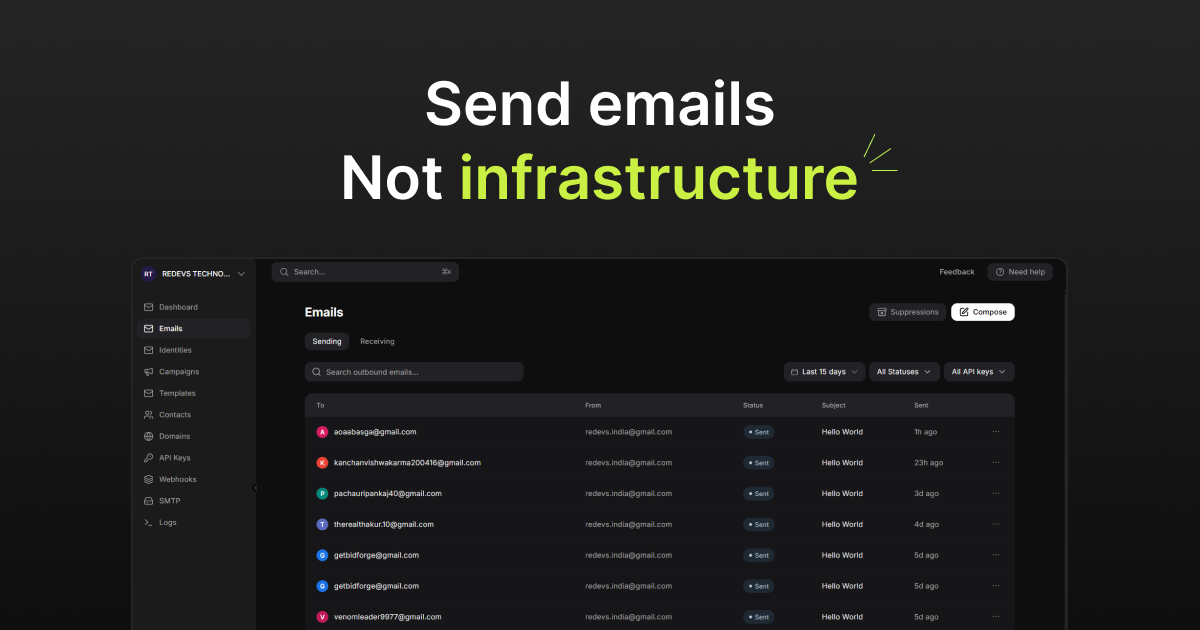
Real-time Mail Logs: When an email doesn't arrive, you need to know why. Live mail logs offer granular insight into every send attempt, delivery status, and any errors encountered. This diagnostic capability is crucial for troubleshooting and optimizing your sending.
Automatic Feedback Loop (FBL) Processing: ISPs provide FBLs to inform senders when recipients mark an email as spam. A good infrastructure automatically processes these to remove complaining users from your list, protecting your reputation.
Adaptive Throttling and Rate Limiting: ISPs have varying rules for how much mail they'll accept at once. An intelligent system adapts sending rates to avoid overwhelming receiving servers and triggering spam filters.
These technical underpinnings are often invisible but are the backbone of consistent deliverability. They free you from the complexities of server management and allow you to focus on your core business and message.
Navigating the Inbox with Mailofly
At Mailofly, we understand that email deliverability isn't just a feature; it's our core promise. Our infrastructure is engineered from the ground up to prioritize your message's arrival. We handle the intricate details of IP reputation, authentication, bounce processing, and real-time monitoring so you don't have to.
With 99.9% uptime, comprehensive live mail logs, and a system built for precision, Mailofly empowers you to send with confidence. Focus on crafting compelling messages, building great products, and engaging with your audience. We'll handle the delivery pipeline, ensuring your emails reach their intended inboxes reliably and efficiently.
Experience reliable sending designed for founders, marketers, and developers who demand performance and clarity in their email operations. If you're looking for an email infrastructure that prioritizes deliverability and provides the tools for transparency, explore what Mailofly offers at [https://www.mailofly.com](https://www.mailofly.com).
Conclusion: Deliverability as an Ongoing Endeavor
Mastering email deliverability is not a one-time task but an ongoing commitment to best practices, technical excellence, and continuous monitoring. It's an engineering challenge that, when met, unlocks the full potential of your email communications. By understanding the core pillars—sender reputation, authentication, content quality, and list hygiene—and leveraging robust infrastructure, you can confidently navigate the complexities of the inbox and ensure your messages consistently arrive where they matter most.